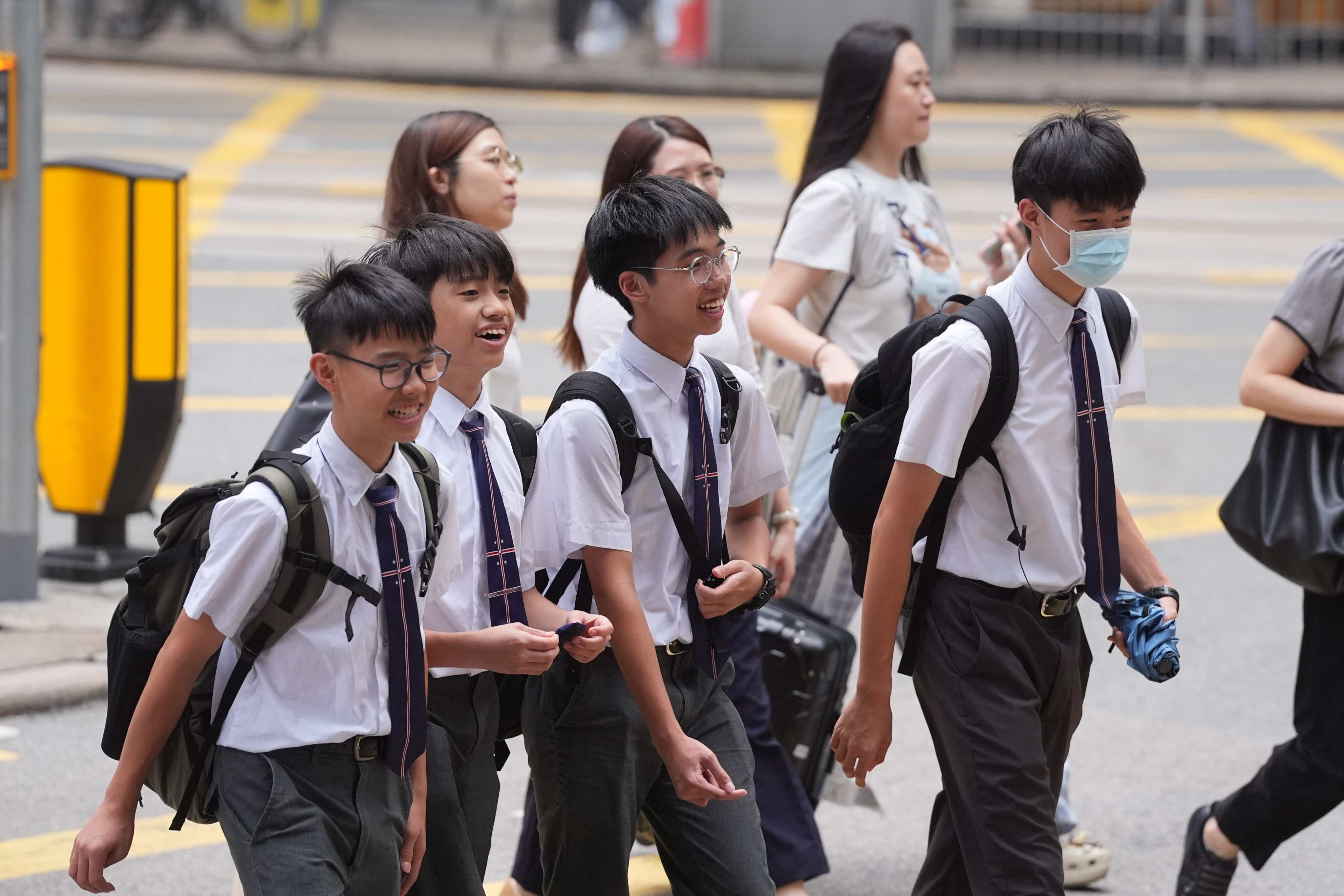
News: Hong Kong schools record net student rise for two consecutive years
-
School enrolments rose by 7,200 in 2025, marking two straight years of recovery after a decade of decline
-
New talent admission schemes brought over 165,000 underage dependants to the city
Hong Kong schools have recorded net increases in student numbers for two consecutive years. The current academic year has seen an increase of about 7,200 pupils.
An industry leader said this growth is due to the rise in the number of dependents of people who moved to Hong Kong under various talent schemes.
The Education Bureau published enrolment figures on its website on April 28.
The data covers all government, aided, private, international and direct subsidy scheme schools at the time of the annual headcount exercise.
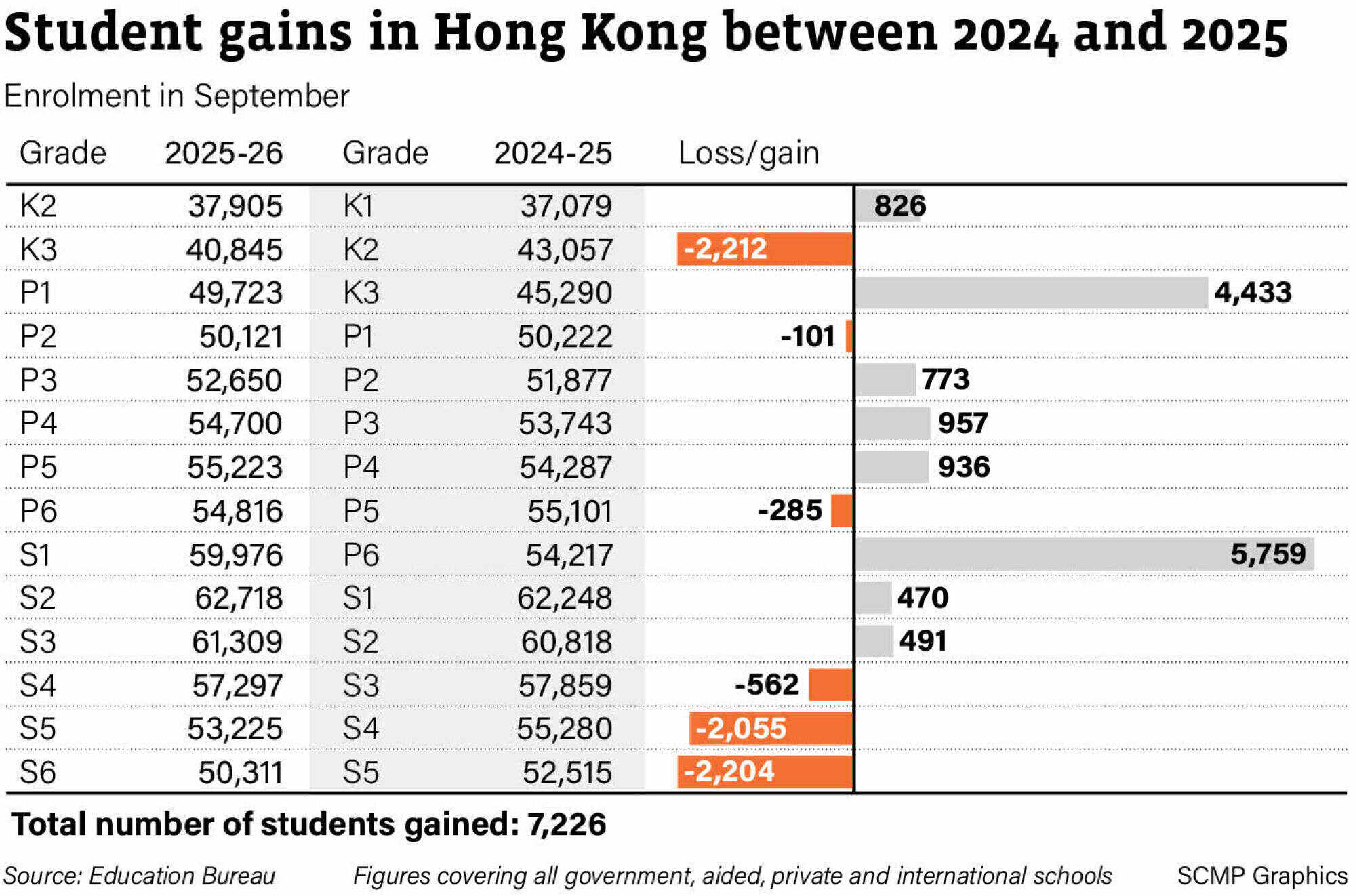
To determine the population change, the South China Morning Post calculated net increases by comparing enrolment figures for Kindergarten One to Form Five in September 2024 with those for Kindergarten Two to Form Six a year later.
This method accounts for the natural progression of students advancing one grade each year.
The tally excluded the 2024-25 Form Six students, who completed their schooling a year later.
Total student numbers rose from about 733,593 to 740,819 – a 1 per cent increase. The net gain in students for the current school year was 7,229, compared with the previous year.
The increase was sharper than in September 2024, when the net increase stood at about 4,500, compared with September 2023.
This marked the second straight year that schools recorded a net increase in students. A previous emigration wave had tapered following the 2019 social unrest and the Covid-19 pandemic.
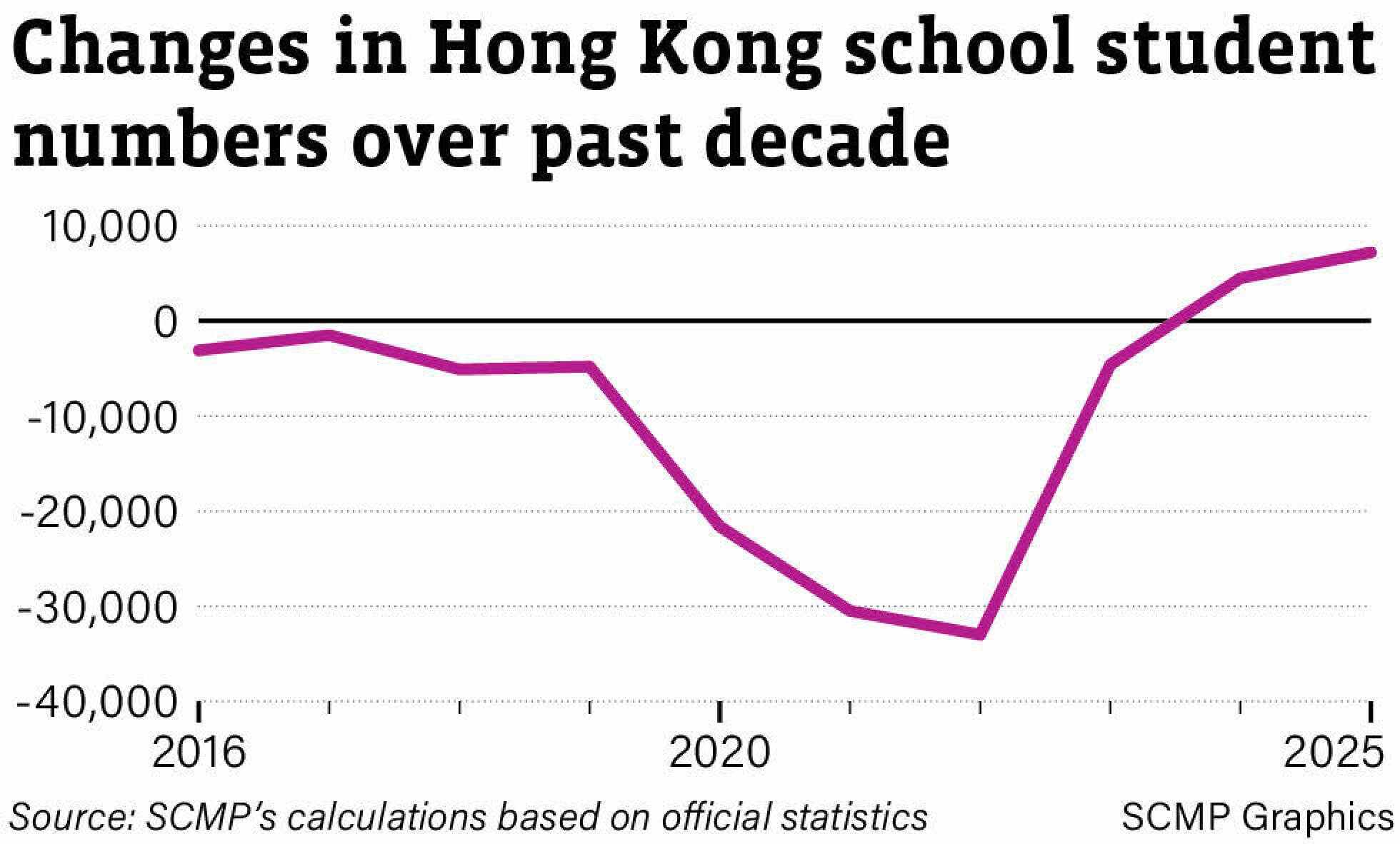
The South China Morning Post found that no annual net increases were recorded in the 10 years before 2024 and 2025.
The city generally lost several thousand students a year due to drop-outs and the pursuit of overseas studies.
During the peak years of student loss in 2022 and 2023, numbers fell by about 30,000 annually. Several schools also recorded their highest withdrawal rates.
The figures changed from a net decrease to a net increase in 2024. It was about a year after the Top Talent Pass Scheme was launched and the annual quota for the Quality Migrant Admission Scheme was removed.
According to government data from April, about 165,350 dependents aged under 18 have been approved to come to Hong Kong since 2023 through seven different talent schemes.
Staff writers
Question prompts
1. Which of the following statements are false, according to the information in News?
(1) Hong Kong schools recorded a consistent annual net increase in students throughout the decade leading up to 2024.
(2) Total student enrolment in the current school year increased by 1 per cent, with a total of over 740,000 pupils.
(3) The net gain of students in September 2024 was larger than the net gain recorded for the current school year.
(4) More than 160,000 under-18 dependants have been approved to come to Hong Kong through various talent schemes since 2023.
A. (1), (2) only
B. (1), (3) only
C. (2), (4) only
D. (3), (4) only
2. List two policy changes that contributed to the shift from a net decrease to a net increase in Hong Kong student numbers starting in 2024.
3. Why is it necessary to track specific student cohorts over time rather than simply comparing the total headcount of the same grade levels year over year? Explain using News and your own knowledge.
Graph
Question prompts
1. Based on the chart, in which specific year did Hong Kong experience its steepest drop in student numbers, and approximately how many students were lost that year?
2. How does the graph reflect the impact of the city’s talent admission schemes? Explain using News and your own knowledge.
Issue: Challenges for Hong Kong’s new students
-
Immigration and talent schemes are driving a significant influx of mainland Chinese students into Hong Kong schools
-
Many of these students struggle with English proficiency, often requiring them to repeat a grade to catch up
Most dependants under the age of 18 who came to Hong Kong after 2023 have been from mainland China. But some did not arrive in the city immediately after their move was approved.
Chu Wai-lam, chairman of the New Territories School Heads Association and a primary school head in North district, said he had seen a noticeable increase in mainland students joining outside the standard admission period in recent years.
He linked it to people and their children arriving under various immigration schemes.
“We keep receiving applications from parents applying for in-year admission and also getting messages from the [Education Bureau] to see if we could admit more students,” he said.
He added that such parents could either approach schools directly or through the bureau.
“Some are from talent schemes, and some came back from mainland China after leaving Hong Kong for some time. Local students will also talk to them in Mandarin, which is why people may feel the city has more students speaking Mandarin,” he said.
“For those who decided to come and settle in Hong Kong, it would be better for their kids to come when they study in primary school, to help get accustomed to the local environment. If they have to prepare for secondary school admission, they may enrol their kids when they are at a Primary Four or Five level.”
But the principal said the English proficiency of such students was largely not up to standard, with the school typically suggesting they study at a lower grade to catch up. He said students’ ability to make progress depended on how much time and resources their parents were willing to put in.
“The results of the school’s internal exam in Primary Five will affect their admission to Secondary One, so if schools find that applicants are not capable of studying at a Primary Five level, they will suggest studying at a Primary Four level,” Chu said. “For children, studying one grade lower is not a big deal.”
The English Schools Foundation (ESF), the city’s largest international school group, earlier revealed in its annual report that its summer camps had seen a growing number of mainland families.
The foundation said it would work closely with its admissions team to attract this “engaged audience” as part of the group’s overall admissions strategy.
It added that it would modernise its marketing strategies to attract new audiences, including those arriving in the city via talent schemes.
Staff writers
Question prompts
1. According to Chu Wai-lam, list ONE reason why people might notice an increase in the number of students speaking Mandarin in Hong Kong schools.
2. Why do schools often suggest that newly arrived mainland students enrol in a lower grade level, and at what specific primary school levels should parents try to transition their children?
3. Based on the perspectives of both Chu and the ESF, contrast how local public school administrators and international school groups are responding to the challenges and opportunities presented by this new wave of mainland students.
Chart
Question prompts
1. According to the chart, which two specific grade transitions experienced the largest gains in student numbers, and which transition saw the largest loss? Use Issue and your own knowledge to explain these numbers.
2. If Hong Kong schools did not see an increase in students in the past two years, what challenges could they have faced? Explain using News, Issue and your own knowledge.
Glossary
net increases: the overall positive change in a number, calculated by subtracting all losses from all gains
emigration: the act of leaving one’s own country to live permanently in another. In Hong Kong, the net outflow of residents peaked at 89,200 from mid-2020 to mid-2021, coinciding with Britain’s introduction of a specific immigration pathway in response to Beijing’s implementation of the national security law. However, this net outflow decreased to 60,000 in 2022.
Top Talent Pass Scheme: a pathway to move to Hong Kong launched in December 2022. It is available to candidates who earned more than HK$2.5 million (US$320,000) in the past 12 months and those who have graduated from one of the world’s top 100 universities.
Quality Migrant Admission Scheme: a points-based quality migrant scheme launched in 2006 that allows successful applicants to come to the city, along with their dependants, without securing a local employment offer. In 2022, the scheme’s annual limit of 4,000 was lifted.
in-year admission: an application or enrolment into a school that occurs outside the standard, scheduled enrolment period
Sample answers
News:
1. B
2. The launch of the Top Talent Pass Scheme and the removal of the annual quota for the Quality Migrant Admission Scheme.
3. Tracking specific cohorts over time is essential because it reflects the natural progression of students advancing to higher grade levels each year. This approach enables researchers to accurately measure population gains or losses. Simply comparing static grade levels from one year to the next can be misleading, as it overlooks important factors such as dropouts, students leaving for overseas studies, new arrivals, and the annual graduation of Form Six students. (Other possible answers are accepted)
Chart:
1. According to the chart, the lowest point of student loss occurred in 2022, when the net drop reached its minimum level. This aligns with the peak years of student loss, 2022 and 2023, when the numbers decreased by approximately 30,000 to 33,000 annually.
2. The trend line indicates a significant and steady increase that begins after 2022. It crosses the zero baseline into positive territory in 2024, confirming that student numbers transitioned from a net decrease to a net increase one year after the launch of the new talent.
Issue:
1. Local residents have observed an increase in the use of Mandarin due to the influx of children coming under talent schemes, as well as students returning from the mainland after spending time away from Hong Kong. In response, local students are adapting by speaking Mandarin with their new classmates.
2. Schools often recommend that students arriving from the mainland study at a lower grade level because their English proficiency may not meet local standards. Parents generally aim to help their children transition to primary school, focusing on Primary Four or Five to prepare for the important Secondary One admission process.
3. The local public school sector and the international school group approach the influx of mainland students very differently in their operations and strategies. For local schools, represented by Chu Wai-lam, the primary focus is on managing the academic and logistical integration of these students. Administrators have to handle midyear admissions and guide families to enrol their children in lower grades. This approach aims to address significant English proficiency deficits before these students take high-stakes exams. In contrast, the English Schools Foundation sees these families not as a challenge for integration but as a valuable business opportunity. The international school group is utilising its summer camps to engage this demographic and is modernising its marketing strategies to attract talent-scheme arrivals as part of its admissions process.
Chart 2:
1. The largest net gains in student enrolment occurred during the transitions from Kindergarten 3 (K3) to Primary 1 (P1), with an increase of 4,433 students, and from Primary 6 (P6) to Secondary 1 (S1), which saw an increase of 5,759 students. This trend indicates that many families moving to Hong Kong prefer to enrol their children in the local education system at the start of secondary school, as students are more likely to adapt at that point than in the middle of their secondary education. Conversely, the most significant net loss was observed during the transition from Secondary 5 (S5) to Secondary 6 (S6), with a decrease of 2,204 students. It is likely that many of these students left Hong Kong to complete their secondary education elsewhere before proceeding to university. (accept all reasonable answers)
2. If Hong Kong schools had not experienced a change in student enrolment trends over the past two years, many schools would have faced closure or consolidation. This situation would have impacted students, as they would have had to adapt to new learning environments. Additionally, schools might have had to work even harder to compete for students in a shrinking population. (accept all reasonable answers)