Have something to say? Send us a letter using this form.
How language wires the human brain
Leanna Tan, Po Leung Kuk Choi Kai Yau School
We tend to believe we see the world exactly as it is. We assume our eyes record data to formulate an objective outlook, and our thoughts are independent of the words we use to label them. But cognitive psychology suggests a far more multifaceted story.
The Sapir-Whorf hypothesis explains our view as deeply entrenched within the structures of our native tongue.
Language does not function as a neutral window through which we view an objective reality; instead, it alters the focus of our attention and conditions our minds from childhood, establishing our “default” settings of human perception.
Consider a simple, everyday mishap: a glass vase slips from a counter and shatters on the floor. In a landmark study by cognitive scientist and professor Lera Boroditsky, English speakers and Spanish speakers were shown videos of such accidental events.
While the physical stimuli hitting their retinas were identical, their linguistic parameters forced them to encode the memory of the event differently.

As English grammar streamlines an agent for most actions, an English speaker naturally states, “John broke the vase.” Even though the event was an entirely blameless accident, the inherent structure of the language anchors the speaker’s mind to the culprit. Saying “the vase broke” often feels like a deliberate attempt to dodge blame.
Conversely, languages like Spanish or Japanese allow for reflexive, agentless descriptions when dealing with accidents. A Spanish speaker will say “Se rompió el florero” – which literally translates to “The vase broke itself.”
When Boroditsky subsequently tested the participants’ recall, English speakers were exceptionally accurate at remembering who caused the accident, psychologically priming them for a cultural orientation towards blame, liability and punishment.
Spanish speakers, by contrast, were less likely to remember the specific individual involved, but they were significantly better at remembering that the event was an accident. Their grammar directed their cognitive resources towards the nature of the event rather than the identity of the instigator.
This curation of reality deepens when observing how different cultures verify empirical truth. In English, if you state, “The boy is running,” you are under no grammatical obligation to explain how you obtained this information. You could have witnessed him with your own eyes, heard the thumping of his trainers, inferred his sprint from footprints or simply heard it passed along.
English grammar treats the statement as an undifferentiated fact.
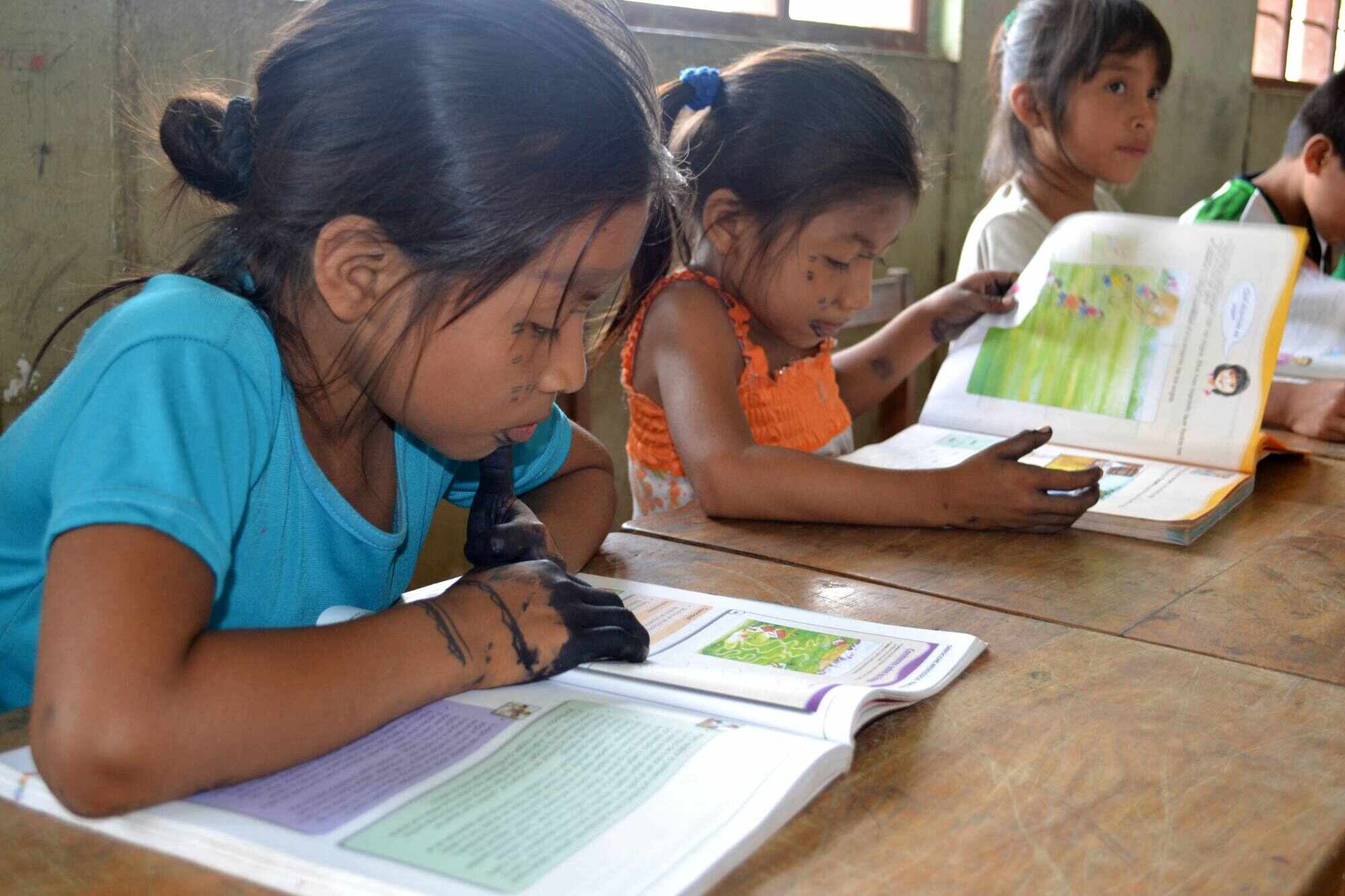
In the Amazonian language Tuyuca, however, stating a fact without declaring your source of knowledge is grammatically impossible. The language uses a system of evidential markers – which are mandatory verb endings that force the speaker to validate their data within the sentence itself.
To say “The boy is running.”, a Tuyuca speaker cannot simply state the action; they must choose between five distinct grammatical endings – “I know because I saw him running”, “I know because I heard him”, “I inferred it from tracks”, “I was told about it,” and a fifth that denotes that the speaker is assuming the fact based on logic.
This requirement drastically alters the cognitive development of children. Developmental experiments show that Tuyuca-speaking children learn to evaluate the validity and source of information much earlier than English-speaking children. Because their language treats data verification as an essential law of basic communication, their minds develop a highly critical approach to rumour and second-hand data.
Ultimately, the phenomenon of linguistic relativity reveals that our world view is constantly being sculpted by the syntax we speak. Language decides whether we focus on the individual or the context, and whether we treat information with scepticism or acceptance. The nuance of individual languages lies not in what they allow us to say, but in what they force us to think about by default.

My exchange programme experience
Andy Hui Chun-wing, SKH Bishop Hall Secondary School
I am writing to share my special experience in an exchange programme in Australia. There are three parts to share: my most memorable moment, what I learned about Australia and myself, and how it affected my future.
In the 11 days of my exchange, the most impressive event for me was my visit to Bayswater Secondary College in eastern Melbourne, Australia.
At this secondary school, I was able to experience lessons, like food technology and physical education (PE). I learned how to bake Anzac biscuits, a local sweet snack. I really enjoyed the process of baking biscuits, and it was my first time baking. It was a novel experience for me.
I also joined the sausage sizzle during lunchtime. In this community event, the school prepared 300 sausages for our school. I really enjoyed the vibe and felt the Australian enthusiasm. I hope I will have the chance to join this activity again.
Before joining this programme, I was not very fluent in English. I was even afraid that someone might laugh at my accent and pronunciation. This made me timid when speaking English to Australians.

During the programme, I also went to the Pacific Coast Christian School in New South Wales. I was matched with a student at this school for four days. Even though my buddy sometimes didn’t understand my English, he didn’t laugh at me. He tried his best to listen and used translation apps to help me.
I also stayed with a homestay family for a few days. I deeply felt the locals’ kindness. They prepared wonderful meals and a comfortable bedroom for me and took me to various places, such as shopping centres and beaches, to experience the local lifestyle.
I discovered that the Australian lifestyle differs greatly from Hong Kong, especially in terms of diet and the overall pace of life. This exchange has changed my attitude towards communicating with others and also taught me some Australian culture.
Back in Hong Kong, I have become more confident and brave, trying things like giving a speech in front of the class and communicating with our teachers. I step out of my comfort zone to join more new activities because I want to broaden my horizons.
This exchange was not just about improving my English. It helped me gain a deeper understanding of the world. Although Australian students and I come from different cultural backgrounds, we can also get along. This journey has definitely become an important part of my life. I hope I have the opportunity to visit Australia again. I would like to explore it more.
A night like this with the Kid Laroi
Cherish Chiu Cheuk-wing, Leung Shek Chee College
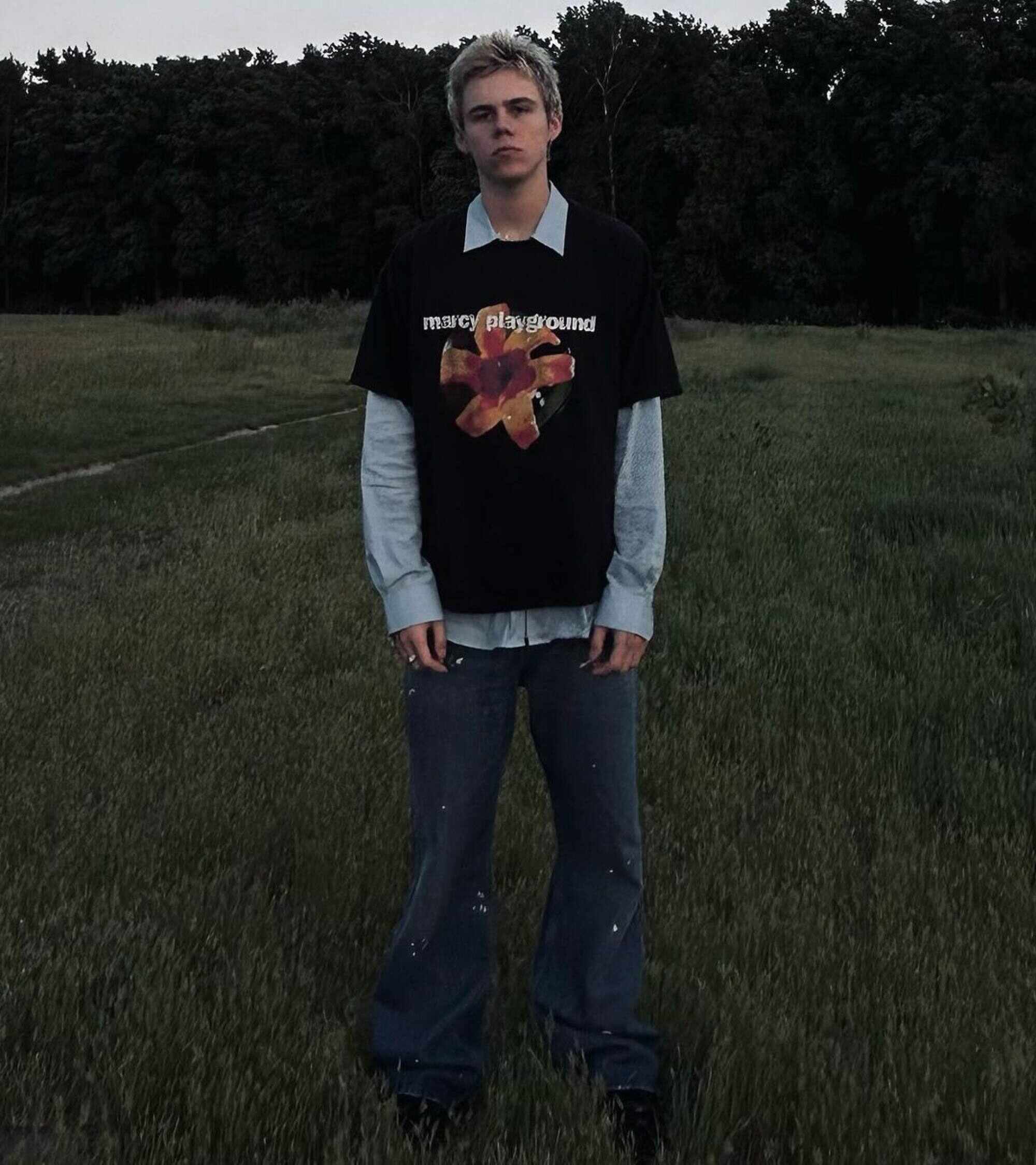
On July 5 and 6, a seismic shift hit Hong Kong’s concert scene. It wasn’t a typhoon, but the arrival of global pop-punk sensation the Kid Laroi, who came for two sold-out nights at TIDES, a premier ship-shaped music venue in Whampoa.
The Australian artist, pop singer, and rapper brought songs like “Girls”, “Diva”, and “Nights Like This” to his concert, which was free standing. Fans were offered an up-close experience. Whenever the music stopped, the crowd would scream.
Laroi, whose real name is Charlton Kenneth Jeffrey Howard, wore a black gown that covered most of his face. The crowd cheered and screamed as Laroi started with “Me + You”. I was taken aback by his calm and full stage presence. He seemed amazed that the crowd was so happy with his performance.
As he continued with “Without You” and “Baby I’m Back”, Laroi asked the Hong Kong audience to yell along with the songs. He said he could feel the audience’s passion and high energy.
Although there was a technical error when he performed “Diva” where the music stopped, it did not put out the fire of the fans; everyone sang clearly. Laroi just stood there and looked at the audience, wiping his eyes as tears slipped down his face. He appeared touched that everyone standing below was his loyal fan.
During the encore, Laroi asked the audience if we would love to listen to one or two more songs. The crowd cheered. Laroi ran off the stage and sang his two famous songs, “Girls” and “Nights Like This”. Everyone was hyped and followed him. I was yelling the loudest in the free-standing corner while he was performing “Girls”. The lyrics “Girls just wanna dance” are still echoing in my brain.
At last, Laroi expressed his love and affection for Hong Kong and said he hoped to revisit the city in the coming years. I will surely go to his future concerts and look forward to seeing him again.