





Every week, Talking Points gives you a worksheet to practise your reading comprehension with exercises about the story we’ve written
Stephanie Ng remembers how stressful family dinners were as a teenager in Hong Kong.
“On the one hand, I wanted to finish everything on my plate because I knew that would make my grandmother happy,” she said.
The 27-year-old is the founder of Body Banter, a charity that helps young people talk about body image and mental health.
Ng also heard a different message from “perfect” women in society.
They would say: “I have to watch how much I ate and control my body.
These different expectations are the focus of a chapter in Ng’s memoir, which is called Big Bites Break Boundaries.
In the book, she shares more about her relationship with food and her body.
The chapter titled “Rice Bowls and Pimples” refers to a Chinese saying used to encourage children to finish their meals. Every rice grain left in the bowl equals a pimple on a future wife or husband.
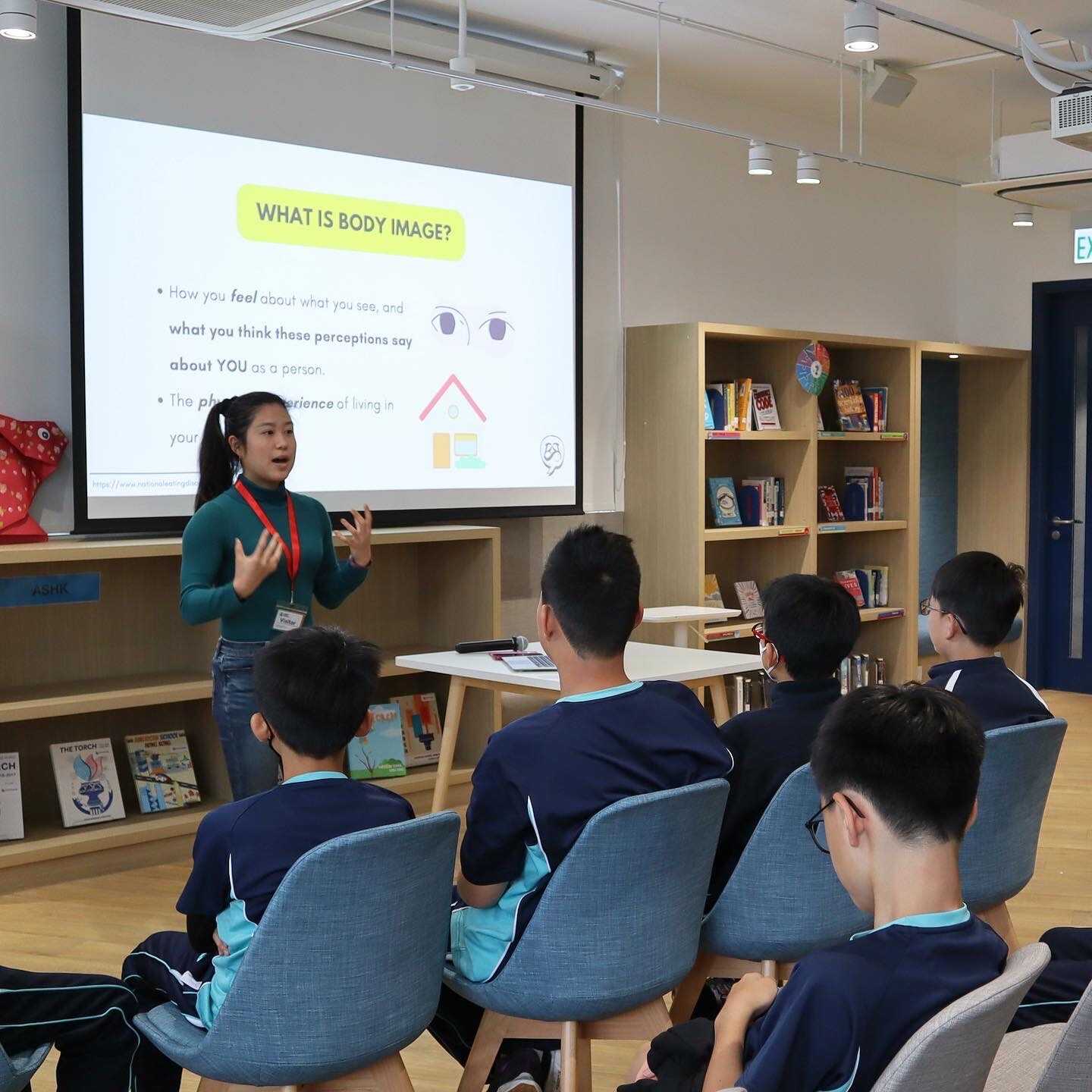
Ng has been speaking about her book, published in January, at secondary schools.
She said students related to this chapter.
Ng explained that many people do not think about the impact of what others would tell them in their daily lives.
But these messages form unrealistic ideas about who we “should” be and how we “should” behave.
In some cases, this can lead to mental health problems.

More help
The mental health advocate said many youngsters still did not get enough help, particularly for body image issues.
Ng said many mental health campaigns and awareness projects often focused on information and numbers.
But real-life stories are also important.
Ng’s memoir is one example of how these stories can make mental health easier to understand.
Often, teens feel isolated in their struggles and they need to be able to see they are not alone.
By sharing details of her journey, Ng shows students that others are battling these issues too.
She also wants to explain the role of culture.
“We’re often so immersed in our culture that we don’t notice the powerful ways that it can influence our lives,” Ng said.
With this knowledge, youngsters might be more likely to speak to someone about their struggles.
That person could be a trusted adult or a school counsellor.
Find inspiration
Students can also look at campaigns such as Mind HK’s “More than a Label”.
The campaign aims to change negative mental health ideas by sharing stories.
Ng said the charity’s storytellers were able to provide a real-life example of how to deal with difficult situations.
“Recovery stories can be a source of inspiration for teens who are going through a tough time with their mental health,” she said.
“But don’t be too hard on yourself if you feel like you are stuck in a cycle.”
Ng urged students to recognise when they faced a challenge. They could also tell themselves they are gaining valuable experience.
“Remember, you are making progress, even if it’s just small steps at a time.”
If you have suicidal thoughts, or you know someone who is, help is available. Dial 18111 for the government-run “Mental Health Support Hotline” or 2896 0000 for The Samaritans or 2382 0000 for Suicide Prevention Services.
To test your understanding of this story, download our printable worksheet or answer the questions in the quiz below.
