Difficulty: Challenger (Level 2)
Water bottles are essential for staying hydrated. However, it’s important to keep them clean.
Dr Franklin Chow Wang-ngai is from Hong Kong Polytechnic University. He warned that these bottles might have more germs than we think.
Types of bacteria
The bacteria in bottles usually come from our skin and mouths. Common types are Staphylococcus epidermidis, Streptococcus salivarius and Micrococcus luteus.
“You might even see a pink or orange slime. This is biofilm, which can contain bacteria like Serratia marcescens or Methylobacterium,” Chow said. He is a research assistant professor in medical laboratory science.
“Biofilm develops when bacteria stick together in a glue-like coating. It is similar to the plaque that forms on your teeth ... The slight amount of liquid [in your saliva] that flows back into the bottle can create biofilm.”
Mould could also be a problem. Chow said that if you see black or green specks, they are usually mould.
Drinking water that has been in contact with mould might cause stomach aches, diarrhoea, sickness or a sore throat.
The kind of liquid in a bottle can change what’s inside. Chow said that the sugar in drinks like juice, soda, sports drinks and milk tea could feed bacteria and yeast, helping them grow.

Keep your bottles clean
To stop bacteria and mould from growing, do a quick clean every day and a deep clean each week.
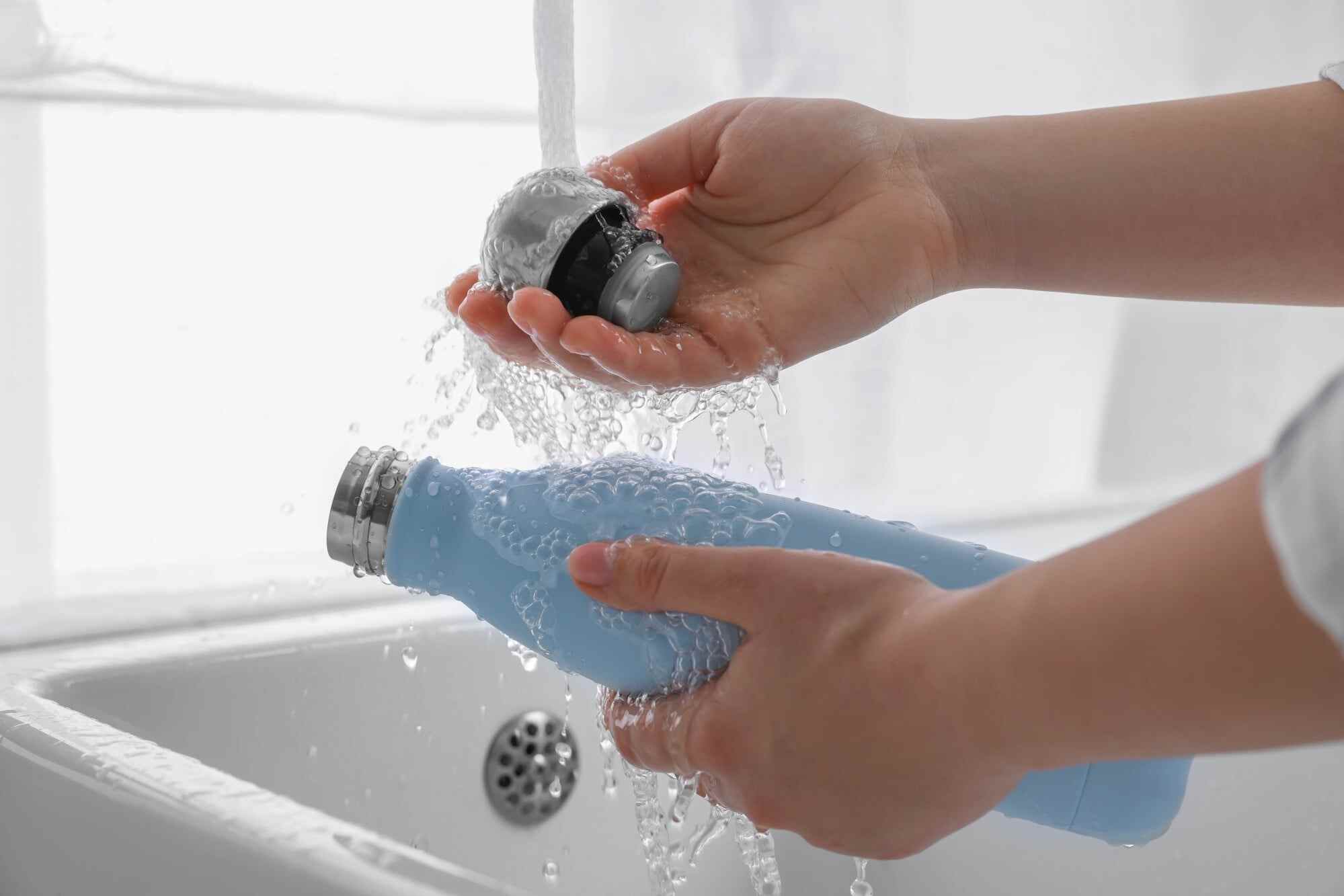
Start by mixing hot water with dish soap in the bottle. Use a brush to scrub the inside well.
After rinsing, let the bottle dry completely with the cap off to prevent mould.
For spots that are hard to clean, remove the bottle lid and use a small brush to scrub the tough-to-reach areas.
After scrubbing, soak the pieces in warm, soapy water. Scrub them again, rinse everything with clean water and let all the parts dry completely before putting the bottle back together.
Replace your water bottle if the material becomes cloudy, gets scratches or retains odours even after thorough cleaning.
Pick the correct material
To stop germs from sticking, use bottles made of smooth materials like stainless steel or glass. These don’t scratch easily.
“If you want to slow down the growth of microbes, use insulated bottles that keep drinks cold,” Chow said.
Selecting a simple water bottle design can help keep it cleaner for longer. Features such as straws, bite valves, flip caps and rubber gaskets have small parts that can trap moisture.
When choosing a water bottle, keep a few features in mind.
First, check that the lid can be taken apart completely for better cleaning. Second, check if replacement rubber seals are available in case the originals wear out. Finally, make sure the inside surface is made of a long-lasting material.