People consuming more sugary drinks and ice cream on warmer days, particularly those with lower incomes, could pose a growing health threat. This trend is concerning as climate change drives up temperatures, according to new research.
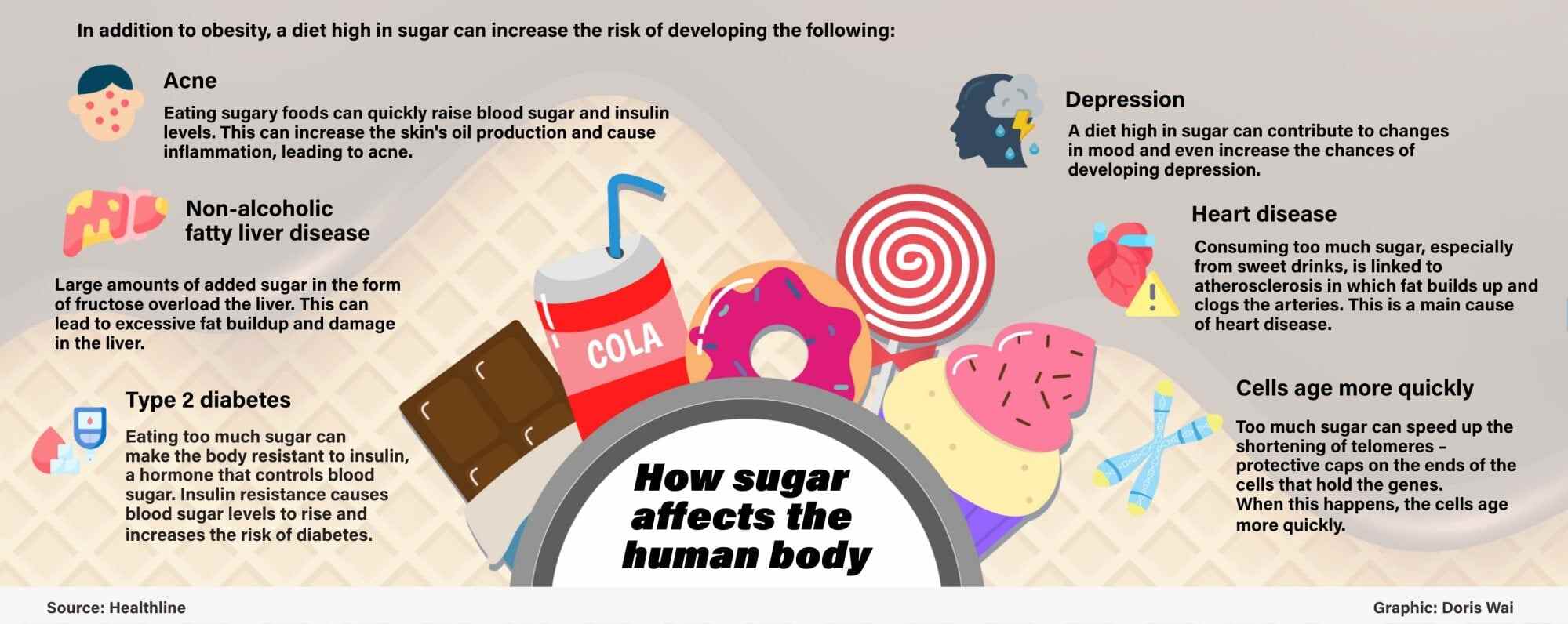
Sugar is a big cause of many serious health issues (check the graphic). Hot days might make people want to drink more sugary drinks or eat ice cream, according to a study in the journal Nature Climate Change.
“Your environment definitely shapes what you eat and how you eat, and climate change is part of it – it might have an adverse influence on your health,” said study co-author Duo Chan of the University of Southampton.
How much sugar is too much?
Under “worst case” climate scenarios, the most disadvantaged groups could have as much as five extra grams of sugar daily by the end of the century, said Pan He of Cardiff University. The American Heart Association’s daily recommendation for men is 36 grams of added sugar – around nine teaspoons’ worth – and 24 grams for women.
One can of soda contains around 40 grams of sugar.
Most Americans consume two to three times the recommended amount, the association said.
The increase in sugar consumption observed in the study levelled off when temperatures exceeded 30 degrees. Chan guessed this was because people had already changed their diet by that time.
Chan said it might be “even worse news” that people were already altering their diets at lower, rather than extreme temperatures.
The modelling also found that people bought fewer baked goods on hot days – likely because they were choosing ice cream or other frozen desserts instead.
An unhealthy diet is one of the four main risk factors for diseases that are responsible for more than 70 per cent of all deaths worldwide, according to the World Health Organization.
What are some alternatives to sugary drinks and ice cream to beat the heat?
A few simple swaps can help you reduce your sugar intake and keep cool at the same time.
• Drink water instead of sugary drinks. This means you must avoid soda, energy drinks, juices and sweetened teas. To add flavour, try making infused water by adding your favourite fruits or herbs.
• Choose whole fruits over sugary smoothies. A great tip is to freeze fruits like watermelon, grapes or bananas to use in your smoothies or eat as a cool treat.
• Sweeten your own yogurt. Instead of buying flavoured yogurt, which is often full of sugar, sweeten plain yogurt with fresh or frozen berries.