Over half of Hong Kong students feel inferior to others due to their parents’ words and actions, according to a survey conducted by a charity. The organisation is urging enhanced training to identify psychological abuse within mandatory reporting frameworks.
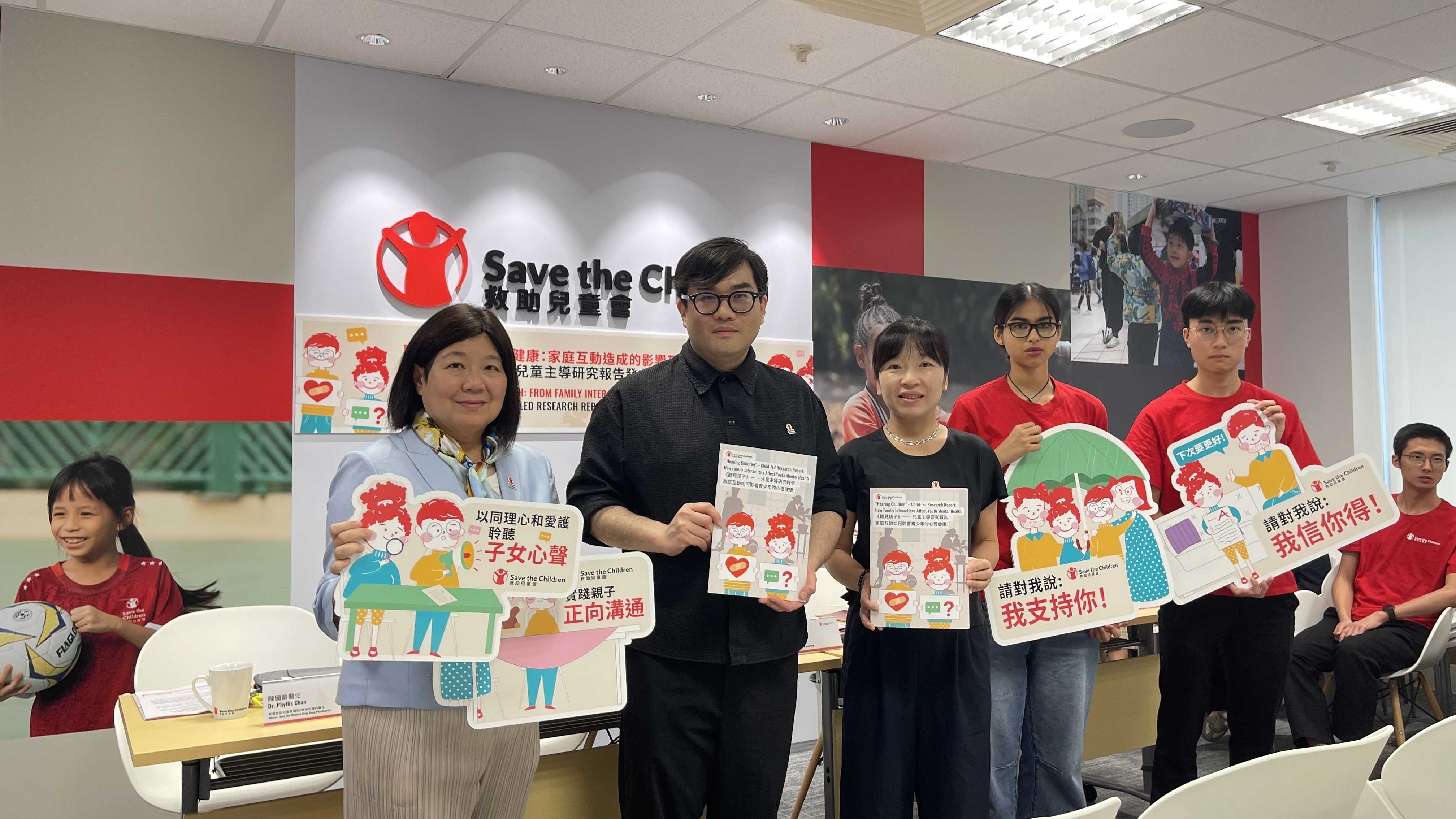
From March to April, Save the Children Hong Kong surveyed 408 adolescents aged 13 to 18 to examine how family interactions influence youth mental health.
The study’s results revealed that 53.1 per cent of respondents believed they were inferior to others – feeling more lazy, stupid or useless – due to parental treatment.
Approximately 20.4 per cent of students reported feeling significant pressure to “be perfect”. Additionally, 21.4 per cent mentioned that their parents frequently compared them to their peers, which made them feel inadequate.
More than one-third felt that no matter how hard they tried, they could never meet their parents’ expectations.
The study also asked the adolescents to share the most distressing behaviours of their parents. These included hurtful remarks, such as “Look at other people” and “You are so disappointing”, as well as when their parents lose their temper or pry into their phones.
In 2025, the Social Welfare Department recorded 1,354 child abuse cases, with 16 classified as “psychological harm/abuse”.
In light of the Mandatory Reporting of Child Abuse Ordinance implemented in January, Save the Children Hong Kong recommended more training to help professionals identify psychological abuse.
The charity also suggested that schools promote positive parenting behaviours.
Bridging family gaps
The study was designed by six youth researchers aged 14 to 17, under the guidance of Hang Seng University’s department of social science.
Seventeen-year-old Nevin Nguyen Tri Nhan is one of the youth researchers.
“What struck me the most was verbal hurt. We also saw that many of the interviewees really wanted their parents to affirm them, but their parents often used language that was blaming and comparative,” Nevin said.
“I actually think that the conflicts between parents and children are often caused by misunderstandings. Maybe both sides have good intentions toward each other, but because of some misunderstandings, many conflicts arise.”
Another youth researcher, Zhara G Shahzad, shared: “One [piece of] advice I’d like to give to parents is to always communicate with their children because our parents are from a different generation, and they don’t like to talk about their feelings as openly as the younger generation.”
The 18-year-old added: “Communication is the key for both parents and children to be able to express themselves without any confusion or ... [accidental] harm.”
Wong Shek-hung, director of the charity’s Hong Kong programme, emphasised that it would take more than legislation to improve family dynamics.
“The law provides only the most basic safety net ... Beyond legislation, we hope to improve parent-child relationships in the long term through support services and public education,” she said, adding that punishing parents was not the ideal way to manage relationships.
“Most parents care deeply for their children; the gap lies in communication and mutual understanding, as well as in adopting positive ways of interaction”.
Understanding children’s trauma
Dr Phyllis Chan Kwok-ling, a psychiatrist and adviser of Save the Children Hong Kong, noted that psychological trauma was difficult to detect.
“This is especially true if children and adolescents conceal their trauma or lack the self-awareness to address it. As trauma accumulates, it may become a root cause of emotional problems and increase the risk of developing conditions such as depression,” Chan said.
However, many students with problems could be falling through the cracks.
The study found that when the respondents felt sad or worried, most said they “rarely or never” talked to parents (73.3 per cent), teachers (96.8 per cent) or social workers (97.5 per cent). Instead, 86.3 per cent preferred talking to friends.
Chan explained that relying solely on peers to handle a problem posed the risk of an “echo chamber” effect, which amplifies beliefs within a group through repeated reinforcement.
“Mutual validation amongst friends may deepen their sense of hurt and intensify wariness or hostility towards parents,” Chan said.
To improve communication, the psychiatrist advised parents to avoid being critical of their children. Instead, they should listen carefully and acknowledge their children’s feelings. “You should understand the emotions behind their words ... Let them feel that their emotions are supported,” she said.
If you have experienced abuse or know someone who is experiencing it, help is available. In Hong Kong, you can dial 2343 2255 for the Social Welfare Department’s hotline. You can also call 2755 1122 for Against Child Abuse’s parent-child support line.