Have something to say? Send us a letter using this form.
Advice for anxiety
Christy Heidi Lie, International Christian School
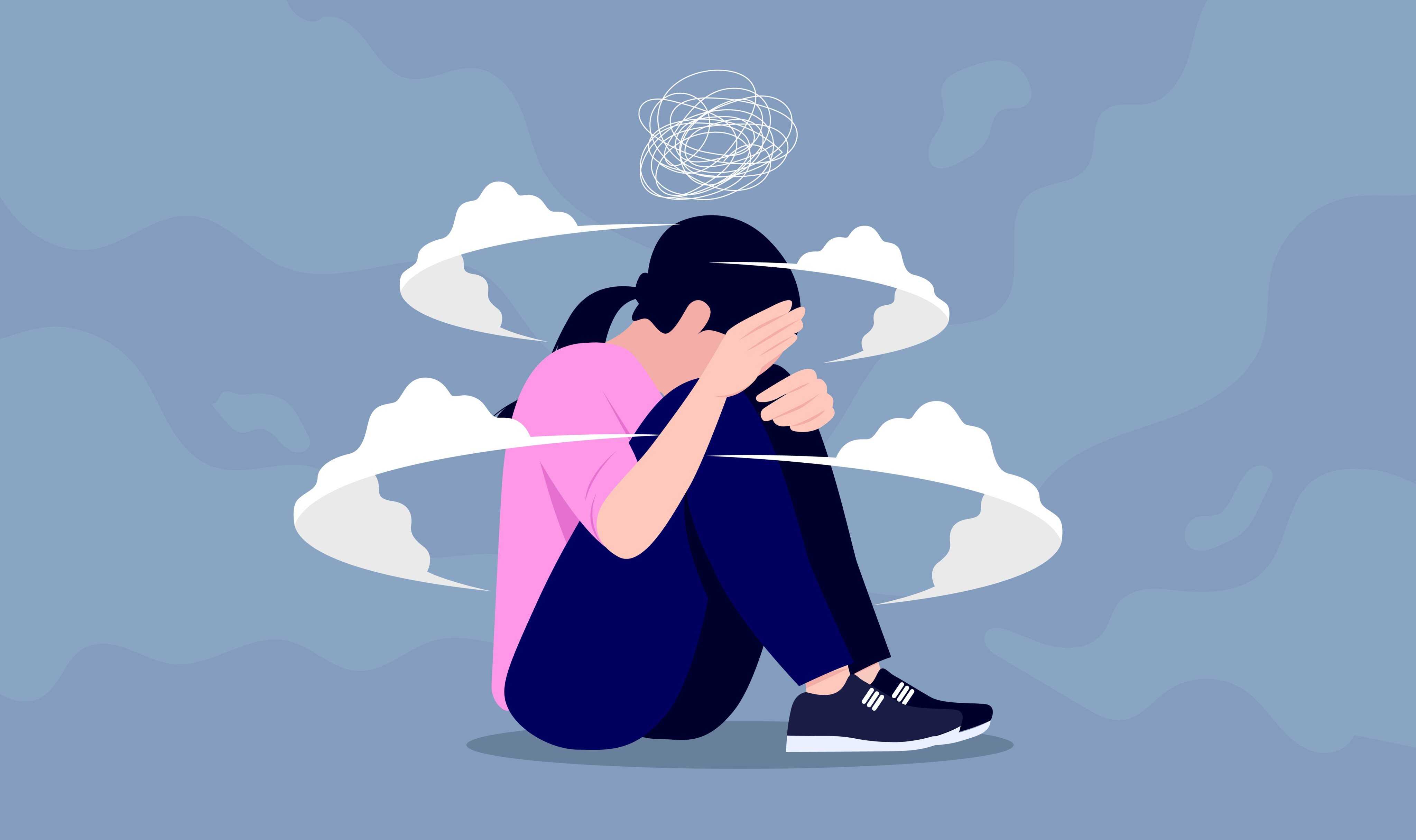
Anxiety is an often indescribable feeling that can leave us with sweaty palms and a racing heartbeat. Everyone experiences anxiety on some level, and teenagers can equate the word with exams, social comparison and even friendships. What actually is anxiety, and how do we, as students, deal with it?
The term “anxiety” can be replaced with words like “worry” and “nervousness”, and it is often directed at an uncertain outcome. Research shows that humans tend to fear the unknown, perhaps because evolutionary processes trigger the amygdala, a region of the brain that processes fear.
While being anxious and cautious will surely keep us on our toes, many people have poor experiences with uncontrolled anxiety. For example, I once spent hours worrying about the outcome of an exam, and became distracted during my other classes. Thus, I missed out on important information I needed to know and had to catch up afterwards.
It’s important to remember that no amount of worrying will help a person establish real control over a situation. It doesn’t matter how much you think about it; it is pure superstition that you can change anything by worrying. Why not use your time and effort to ensure a better future instead?
Of course, that is easier said than done. We do not want to worry or be anxious; it simply slips into our brain and overtakes our thoughts. Thankfully, there are ways to keep the anxiety at bay.
Firstly, since anxiety is caused by fear of the unknown, expose it. In his book The Happiness Files, professor Arthur Brooks explains how mapping out all potential outcomes of your situation, even the absolute worst ones, can help you prepare yourself and help you think rationally about what to do in every situation. When things are clear, they seem much more manageable than an indirect fear of “stuff” in general.
Secondly, block off a short amount of time every day dedicated to worry. By giving anxiety a limit of around 10 minutes, we can focus on our priorities while giving ourselves the space to worry healthily.
The next time an anxious thought pops into your head, imagine pushing it behind a door and locking that door with a key, only to entertain it when the time is right.
In situations you can control, spend your time and energy effectively – reflect on what made you anxious and think of ways to avoid making the same mistake twice.
Finally, in situations you cannot control, one way to find peace is to stop looking solely within yourself.
I highly encourage those with faith to practice letting go and to trust in a perfect plan beyond human thinking. This approach helps us let go of issues that constantly worry and bombard us.
By letting go, we can regain our sense of freedom. Sometimes, that may be the best we can do.
Evolving education
William Shek Yiu-wing, GCC & ITKD Lau Pak Lok Secondary School
Balancing tradition and innovation has never been more difficult in education. After reading an article about the increasing number of Chinese parents choosing home-schooling for their children, I found myself reflecting on a growing dilemma shared by both the mainland and Hong Kong.
While some families welcome the government’s limited approval of home-schooling under unique circumstances, the majority remain bound to a conventional, exam‑driven education. But the fact that home-schooling has become more popular in China, despite being officially prohibited, is proof that some parents are ready to challenge the system.
From my observation, this trend stems from families’ desire to nurture creativity and strengthen parent‑child connections.
One advantage of home-schooling is that students can design their own timetables, work at their own pace and integrate real‑life experiences into their lessons. Not only can home-schooling reduce study stress, but it can also help students develop independence and self‑management skills.
There are several drawbacks to home-schooling, however. Home-schooled students, who spend most of their time learning alone, may struggle to develop social skills or teamwork abilities. Without peer interaction, they may find communication and empathy difficult later in life.
Another downside is the absence of a formal certification system. In university admissions or job applications, home-schooled students may be at a disadvantage because they lack standardised transcripts or exam results.
Another crucial element of modern education is artificial intelligence (AI), which has redefined how students learn and how teachers instruct. Thanks to AI‑aided tools, teachers can create personalised lessons, and students who use AI to analyse data or draft projects can learn more efficiently.
Still, some schools continue to prioritise rote memorisation over creativity, ignoring the fact that the increasing reliance on automation will demand human innovation.
If AI is implemented correctly, it could lead to an era in which education blends efficiency with imagination. What educators should do is guide students to collaborate with AI wisely rather than blindly copying its answers, fostering critical thinking and problem‑solving skills.
Hong Kong’s education system must evolve. It is time for the government and schools to take action to regulate home-schooling, alleviate study pressure and integrate AI wisely.
It is important to remember that education’s true goal is not simply to produce test‑takers but to cultivate confident, compassionate and creative learners ready to thrive in an unpredictable world.